
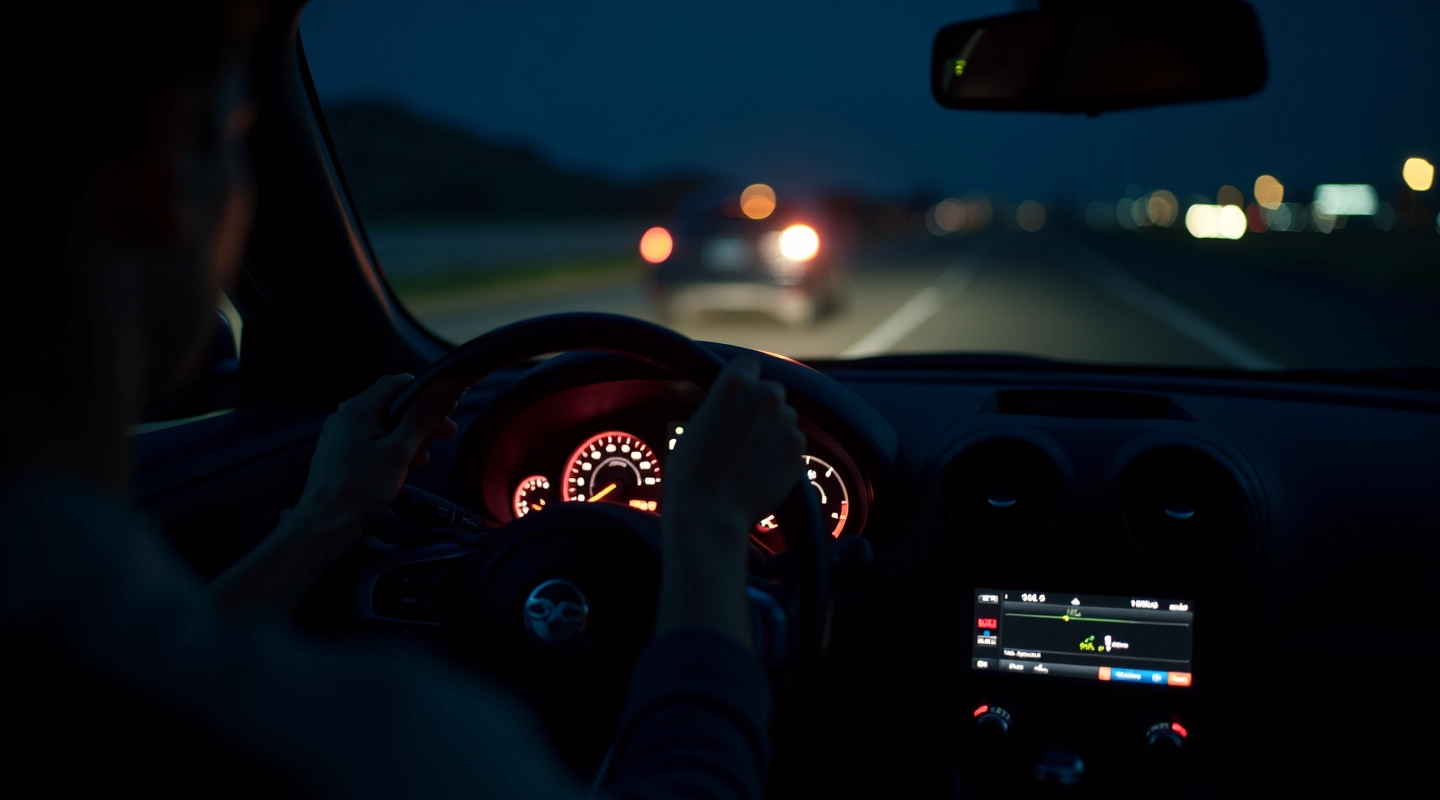
Pupil Response & Age-Related Vision Changes in Low Light
Your eyes change at 35 and keep changing. Learn exactly what happens, why recovery time increases, and practical compensation techniques that actually work.
Read guideAdvanced visibility techniques, low-light vehicle control, and reaction time training designed specifically for drivers 35-65 in San Diego.
We're focused on the real challenges: aging eyes, beam management, split-second decisions, and the confidence to drive safely when visibility drops. Track sessions included.
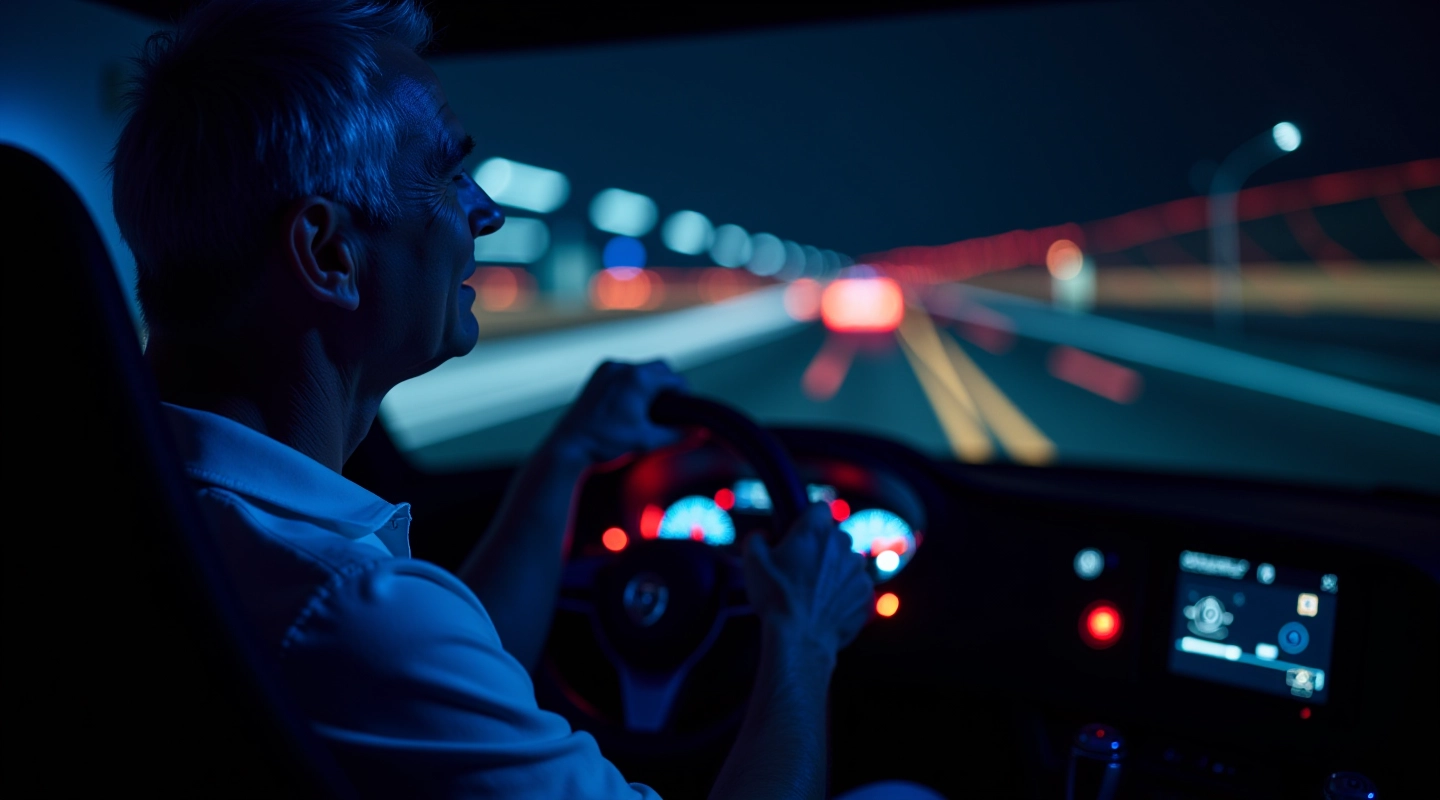
Your eyes change at 35. Recovery time increases. But understanding those changes—and knowing how to compensate—is the difference between confident driving and anxious driving. We teach the science and the strategy.
Founded in 2018 to address a gap
Night Driving & Advanced Visibility
We start with the science. Pupil response, glare recovery, beam patterns. You need to know what's actually happening with your vision and your vehicle.
Knowledge becomes skill through headlight management, road positioning, and speed adjustment. We teach practical decisions you'll use every night you drive.
Real training on a track. Real scenarios. Real feedback. You'll know exactly what you're capable of and where you need to focus more attention.
Three core areas that make a real difference
Your pupils don't respond as fast at 40 or 55. Recovery time after glare increases. We explain why, show you the research, and teach compensation techniques that actually work.
High beams aren't just for dark roads. We break down modern beam patterns, when to switch, how oncoming traffic detection works, and why timing matters for your safety.
Reaction time slows at night and with age. These five exercises sharpen your response speed. Then we put it all together on the track in San Diego with real-world scenarios.
No. Even if you see fine at night, your eyes are aging in predictable ways. We're teaching you what's happening and how to adjust your driving to match your actual abilities—not what you think they are.
Not at all. The techniques work in any vehicle. Modern headlights are different, but we cover what matters regardless of what you're driving. Come with what you have.
Sessions vary by program. We'll walk you through exactly what to expect—vehicle types, scenarios, timing, what you'll learn. Contact us for current schedule and details.
Track time isn't about speed. It's about control and decision-making in a safe, controlled environment. We scale difficulty to your experience level. Beginners work with instructors one-on-one.
That's exactly why we're here. Anxiety often comes from not understanding what's happening. Once you know the mechanics and practice the strategies, confidence follows naturally.
Deep dives into the topics that matter most
Your eyes change at 35 and keep changing. Learn exactly what happens, why recovery time increases, and practical compensation techniques that actually work.
Read guide
High beams aren't just for dark roads. We break down beam patterns, oncoming traffic detection, and the science of when switching actually improves safety.
Read guide
Reaction time slows at night and slower with age. These five exercises improve response speed and build the neural patterns you need for emergency situations.
Read guideWe're here to help. Whether you're just starting to notice vision changes or you've been nervous about night driving for years, we've built resources and training specifically for drivers like you.
Get in touchWe use cookies to improve your experience and understand how you use our site. By continuing, you accept our use of cookies.