
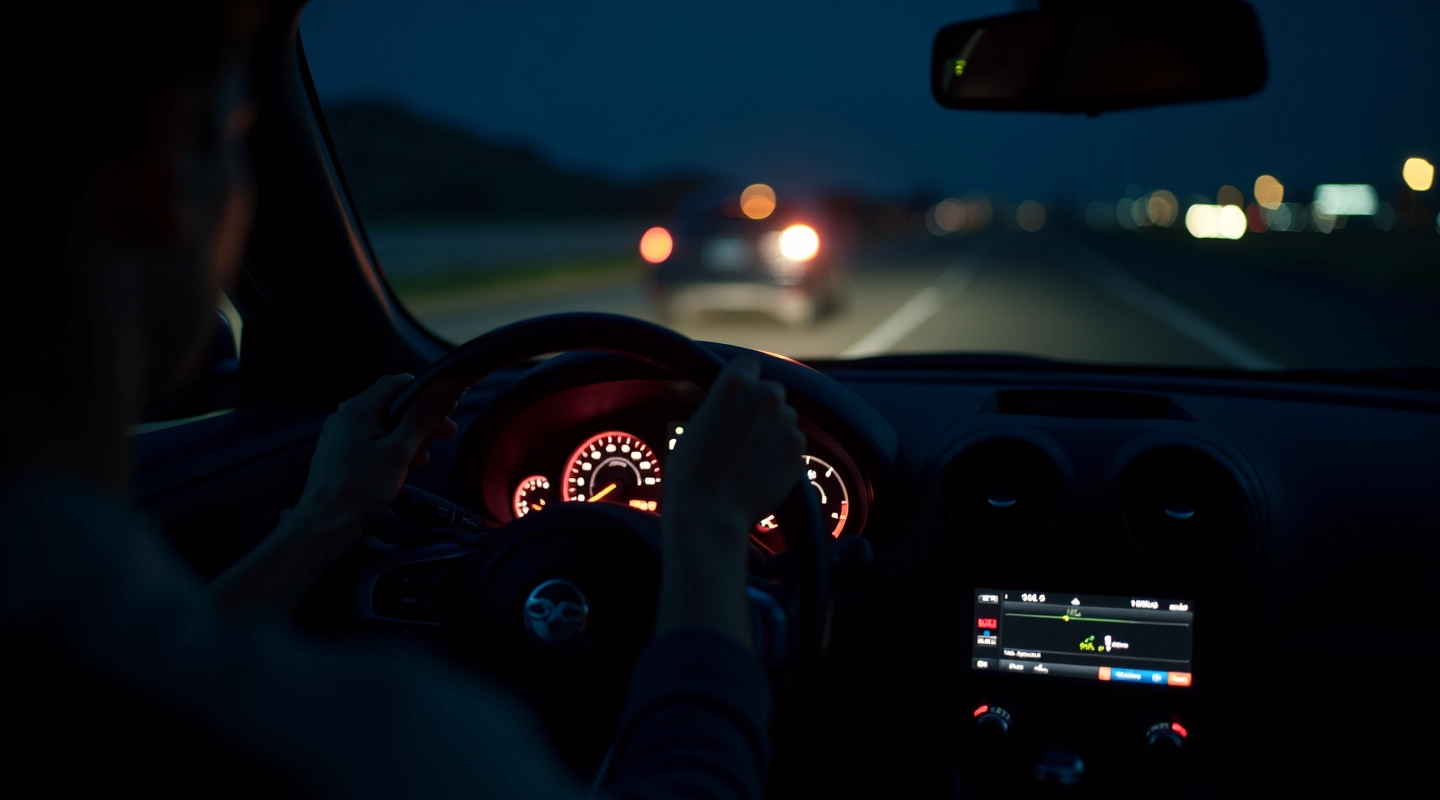
Pupil Response & Age-Related Vision Changes in Low Light
Your eyes change at 35 and keep changing. Learn exactly what happens, why recovery slows, and how to compensate.
You'll spend 3 hours on the track under realistic highway lighting. No traffic, full feedback, and the chance to actually practice what you've learned in a safe environment.
Written by
Editorial Team
Written by the Night Driving Editorial Team, focused on practical safety guidance for drivers navigating low-light conditions.
Here's the thing — knowing the theory and actually doing it are completely different. You can read about proper headlight techniques all day, but until you're on a track at night, adjusting your approach in real-time, it doesn't stick.
Our nocturnal sessions in San Diego aren't about racing. They're about control. Over three hours, you'll encounter situations you might see once every few years on actual roads. On the track, you get to practice them safely, with coaching, and without putting yourself or anyone else at risk.
Most drivers don't realize how much their night driving skills deteriorate between ages 35 and 55. Track sessions help you recalibrate and rebuild confidence.
We split the three hours into manageable blocks so you're learning, not just burning through fuel. You'll start with orientation and vehicle setup, then move into progressive exercises.
30 minutes. We'll check your headlight angles, tire pressure, and make sure your vehicle is set up safely. No surprises once you're moving.
20 minutes. Gentle laps around the track to get comfortable with the layout and feel the lighting conditions at speed.
90 minutes. You'll build speed gradually while practicing beam switching, braking distances, and cornering techniques. Coaching happens via radio.
40 minutes. Simulated situations: oncoming traffic (marked with lights), reduced lighting sections, and decision-making under pressure.
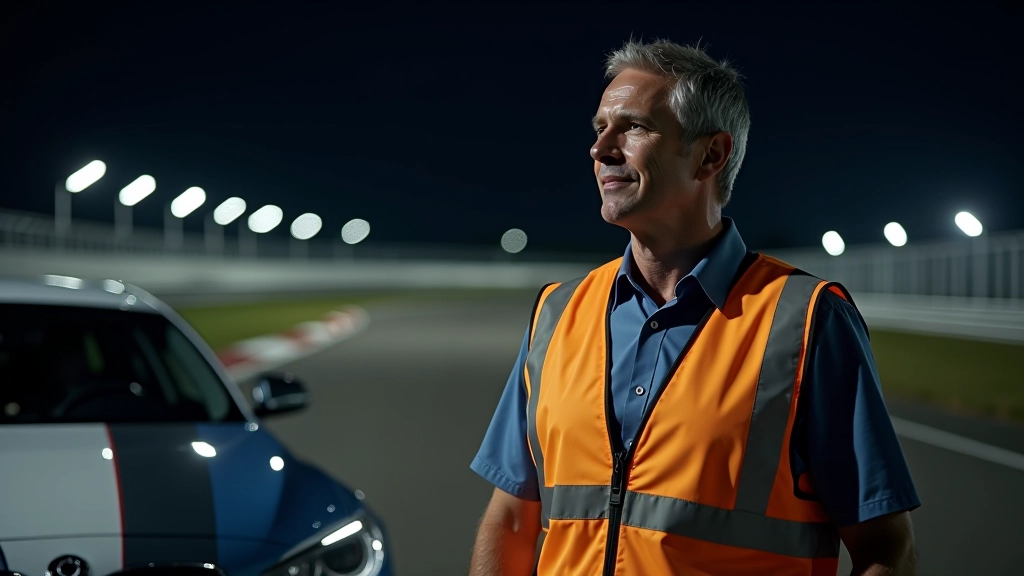
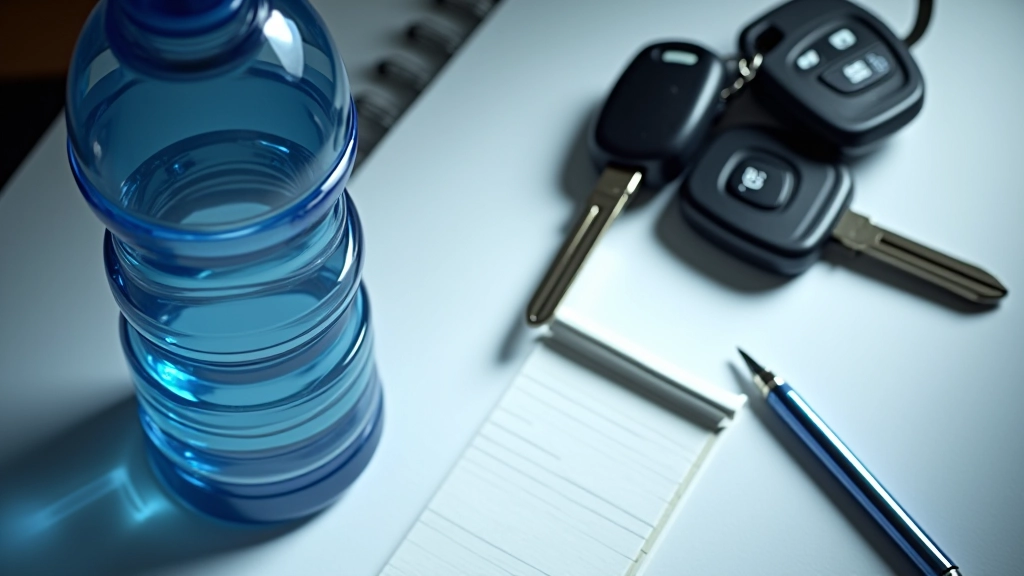
You don't need special gear. Wear comfortable clothes you can move in — no restrictive jackets or heavy boots. You'll be sitting for most of it, but you'll also get out of the car for brief walk-throughs of the track layout.
Bring water. Seriously. Even though it's night, you're focused and alert the whole time. Your body burns more energy than you'd expect. We've got snacks and coffee, but having your own bottle means you're not waiting.
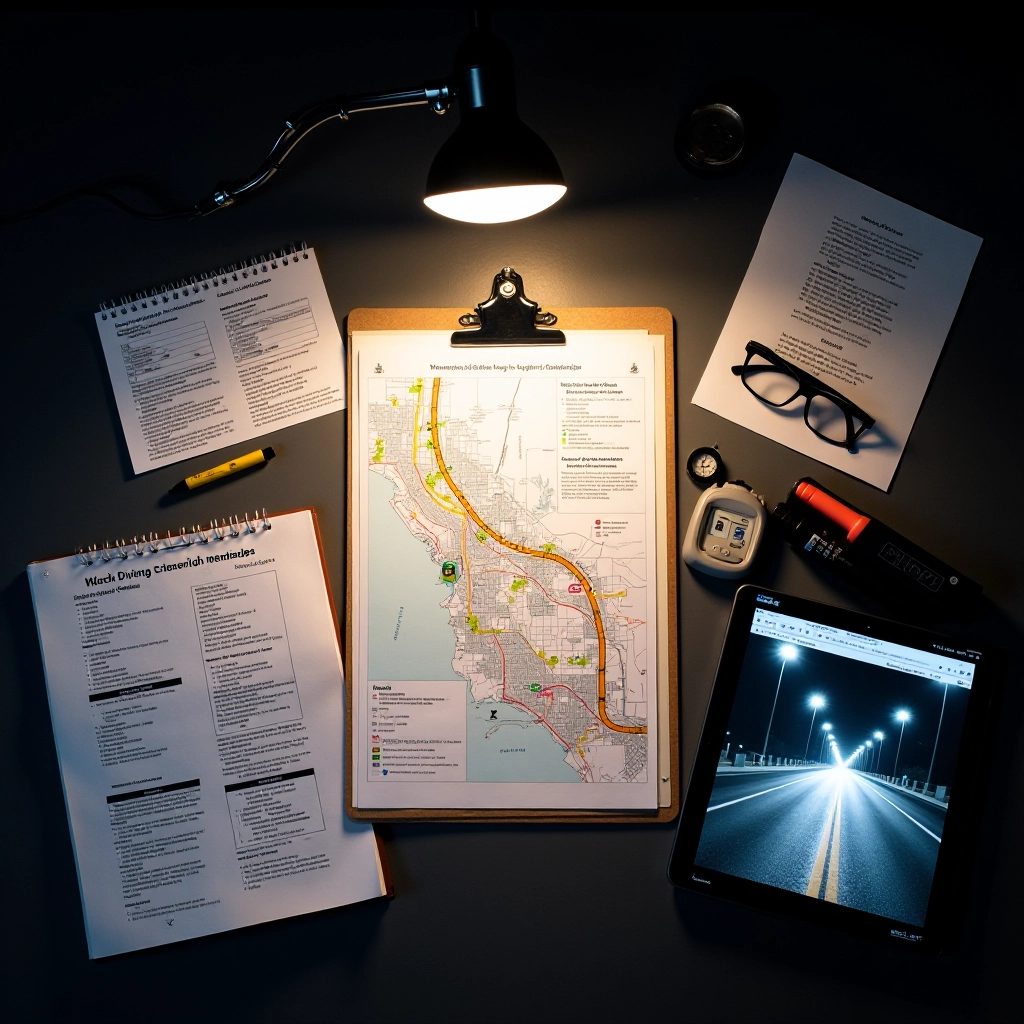
Bring a notebook if you like taking notes. Some people find it helpful to jot down what they're working on between exercises. Your phone works too, but we ask that you keep it put away while driving.
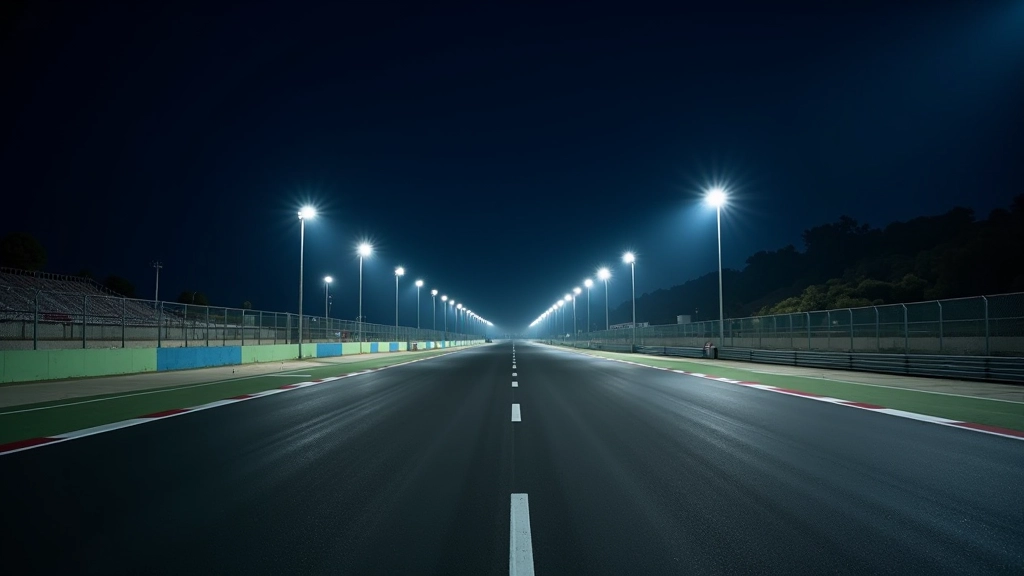
San Diego's track has installed a realistic lighting setup that mimics actual highway conditions. This isn't a brightly lit parking lot. You're working with the kind of visibility you'd get on a two-lane road at night with standard street lamps and your headlights as your main tool.
The coaches adjust lighting scenarios based on what you're working on. Early in the session, it's closer to well-lit highway conditions. As you progress, we introduce sections with reduced lighting to test your decision-making. By the challenge portion, you're navigating more demanding visibility situations.
We don't go completely dark — that wouldn't be safe or realistic. But we do push you into scenarios where you're genuinely uncomfortable if you haven't practiced. That discomfort is the point. It's where learning happens.
Real-world application: The lighting setup mimics conditions you'll encounter between 8 PM and midnight on typical American highways. Not racing lights. Not pitch-black. Just the actual conditions you need to master.
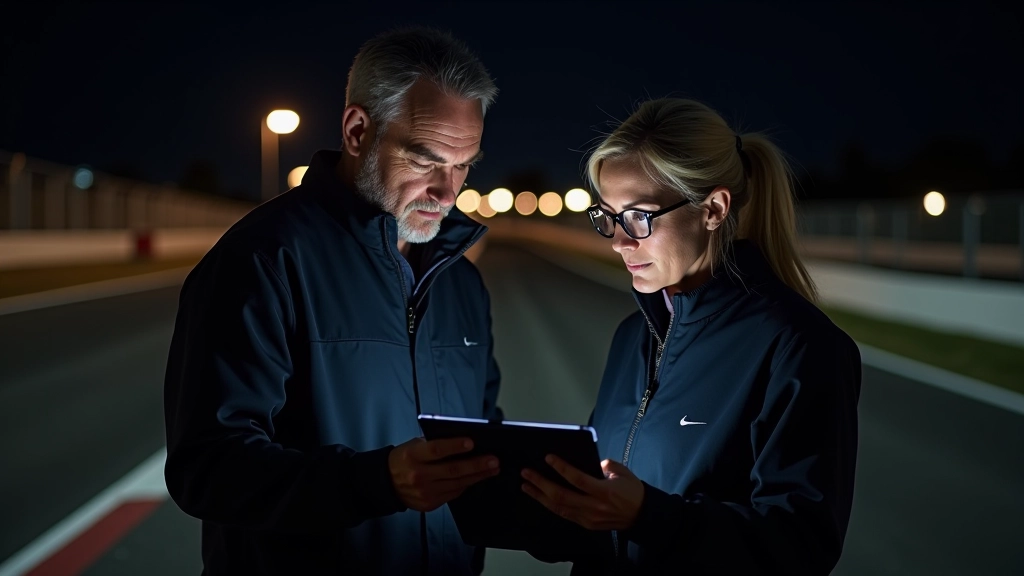
You're not alone out there. Each vehicle has a coach who communicates via radio throughout your session. They're not criticizing — they're coaching. "Try drifting your gaze further ahead," or "Your high beams are on too long here," or "Good line, now let's work on your brake pressure."
After you finish driving, you'll sit down with your coach for a 15-minute debrief. They'll review what worked, what needs adjustment, and give you specific takeaways for your everyday driving. You're not getting generic feedback. It's based on exactly what you did that night.
We also use data. Speed, braking patterns, steering inputs — it all gets recorded. You'll see your own performance data so you understand exactly where you made progress and where you can still improve.
You'll drive home that night. And you'll notice something different. The road feels more predictable. Your decisions feel clearer. You're not second-guessing yourself as much. That's the whole point. We're not trying to make you a better racer. We're making you a safer, more confident driver when the sun goes down.
Most people leave saying they wish they'd done this years ago. You can't undo lost reaction time or forgotten skills, but you can rebuild them. Three hours on a track is a solid step toward improving your ability to handle the roads you actually drive.
Sessions run monthly. Weather in San Diego is cooperative year-round, though we do occasionally reschedule if wind conditions aren't safe for the track. You'll get all the details when you book.
Educational Note: Individual learning outcomes vary from person to person. Track sessions are designed to build foundational skills and confidence in low-light driving. Results depend on your existing experience, attention during coaching, and practice application on regular roads. This is educational guidance, not a substitute for ongoing driver education or professional instruction tailored to your specific needs.
Your eyes change at 35 and keep changing. Learn exactly what happens, why recovery slows, and how to compensate.
High beams aren't just for dark roads. We break down beam patterns, oncoming traffic rules, and when to switch.
Reaction time slows at night and slower with age. These five exercises improve response and decision-making.